Hunter Ed vs. Other Hunter Safety Courses: Why Hunter-Ed Is the Best Choice
New hunters comparing course options have more than one place to get certified, but they aren't all built the same way. Hunter-Ed stands out as the best choice because it's IHEA-USA approved and built directly with more than 45 state wildlife agencies, and its certification carries reciprocity in all 50 states once you're certified.
That combination of direct state partnerships and broad recognition is why so many new hunters search for the best hunter safety course online before they register.
Before you commit to any course, it helps to understand why hunter education matters in the first place. Most states require it before you can buy your first hunting license, and the course you choose affects how quickly you can get certified, what it costs, and whether you'll need an in-person field day.
Below, we break down what to look for in a course, how Hunter-Ed compares to two other well-known options, and how to find your certificate if you ever misplace it.

Hunter-Ed vs. Other Hunter Safety Courses: Key Comparison
When hunters compare providers to find the best hunter safety course, three names come up often: Hunter-Ed, Hunter Safety USA, and NRA Hunter Ed. Here's how they compare on the factors that matter most to a new hunter.
Hunter-Ed vs Other Hunter Safety Courses | |||
| Feature | Hunter-Ed | HunterSafety USA | NRA Hunter Ed |
| IHEA-USA Approved | Yes | Yes | Yes |
| Direct State Agency Approval | 45 states, each with its own agency partnership | Certified through Texas Parks and Wildlife. Certificate carries nationwide reciprocity. | Adopted directly by roughly 15 state agencies so far, with more added over time |
| Online Course Available | Yes, full online certification in 45 states | Yes, online-only | Yes, in participating states. Some states also require an in-person field day or voucher. |
| Field Day Handling | Built into each state's course automatically, when required | Not required. Certificate issued after the online course. | Required in some states even after the online portion |
| Cost | Course fees vary by state, generally $20 to $35 | Paid course fee | Free |
Hunter-Ed's advantage comes from its direct partnerships with individual state agencies, each building requirements into the course itself, rather than relying only on reciprocity from a single state's certificate. This IHEA-USA accreditation standard is the baseline all three providers meet, but how each course is built and approved varies.
States Where Hunter-Ed Is the Official Hunter Education Provider
Hunter-Ed offers a full, state-approved online certification course in the following states:
Additionally, Connecticut, New Jersey, and Oklahoma offer a Hunter-Ed study guide to help you prepare, but certification in those states runs through a different provider. Massachusetts and New Hampshire aren't currently on Hunter-Ed's course list.
Requirements shift from year to year, so it's worth a quick check of your state's hunter education requirements before you register. You can also learn more through the national hunter education program that funds state certification efforts.

How to Choose the Right Hunter Safety Course
Not every hunter safety course is approved the same way, and the differences matter once you're standing in line at a license counter. Before you register for a course, work through these steps:
- Verify the course is approved by your state wildlife agency. States list their approved providers directly on their wildlife agency websites, so confirm this before you pay for anything.
- Check whether the provider is IHEA-USA accredited. This ensures the course meets national content standards for firearm safety, hunting laws, and conservation, which supports recognition if you hunt in other states.
- Confirm the course format meets your state's requirements. Some states allow a fully online course. Others require an in-person field day or a hybrid format, so match your choice to your state's rules before you register.
- Compare cost, completion time, and field day availability. Course fees, time commitment, and field day scheduling vary by state and provider, so weigh all three before choosing.
- Verify that certification is recognized across state lines. If you hunt in more than one state, confirm your certificate is recognized wherever you plan to hunt.
Working through these steps before you register saves you from starting a course that doesn't count toward your state's requirement. Understanding the full hunter safety certification process up front also helps you plan around your hunting season instead of scrambling for a course a week before opening day.
I Lost My Card: How to Look Up a Lost Hunter-Ed Certificate
Once you've chosen a course and gotten certified, your certificate becomes an important document you'll need every hunting season.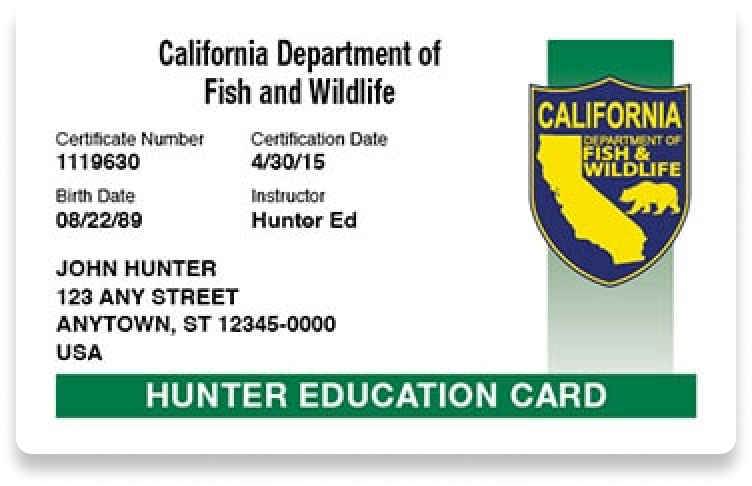
Whether you completed your course last month or a decade ago, a lost or misplaced certificate is a common problem, and it doesn't mean starting your hunter education over. Most states offer a straightforward way to recover your certificate number or a replacement card, so try these steps:
- Log in to your Hunter-Ed account with the username and password you used for the course, and reprint your certificate from your student dashboard.
- If you don't have online account access, check your state wildlife agency's hunter education lookup page.
- Order a replacement wallet card through your state's designated card-replacement service, if one is available.
- Contact your state wildlife agency directly if no online lookup or replacement option exists for your state.
- If you aren't able to find your card through Hunter-Ed or your state agency's website, visit the ilostmycard website and look up your certification to get a replacement.
Most hunters recover their certificate within a few minutes using the first two steps. Once you have your certificate number, you likely won't need the physical card again, since most license systems verify certification electronically at the point of sale.
Keeping your login information and certificate number saved somewhere accessible now can save you a scramble right before opening day.
Choose Hunter-Ed as Your Hunter Safety Course with Confidence
Choosing the right hunter safety course comes down to verified state approval, national accreditation, and a format that fits your schedule. Hunter-Ed's direct partnerships with state wildlife agencies make it a strong starting point for new hunters who want a straightforward path to their first hunting license.
If you're ready to get certified for the upcoming season, now is the time! Choose the Hunter-Ed course for your state, get your card, then get out for a hunt.

Frequently Asked Questions (FAQs)
Q: Is Hunter-Ed the same as Hunters Ed?
A: "Hunters Ed" and "Hunter Ed" are common misspellings of Hunter-Ed, the official name of the course provider at hunter-ed.com. The spelling matters because other unrelated providers use similar-sounding names. Always check the URL to confirm you're registering through the correct site.
Q: Is hunter-ed.com IHEA-USA approved?
A: Yes, Hunter-Ed courses are approved by IHEA-USA, the organization that sets minimum content standards for hunter education nationwide. Hunter-Ed also holds direct approval from more than 45 individual state wildlife agencies. That combination is why Hunter-Ed certificates are recognized across state lines.
Q: What is the difference between Hunter-Ed and Hunter Safety USA?
A: Hunter-Ed holds direct approval from more than 45 state wildlife agencies, with each state's specific requirements built into the course. Hunter Safety USA's certificate is issued through Texas Parks and Wildlife and relies on nationwide reciprocity rather than individual state agency partnerships. Both are IHEA-USA approved, but the underlying approval structure is different.
Q: Is Hunter-Ed free?
A: No. Hunter-Ed charges a course fee that varies by state, generally between $20 and $35. The fee covers course materials, final exam attempts, and your certificate of completion. Some states also charge a separate certification fee on top of the course cost.
Q: Which states does Hunter-Ed cover?
A: Hunter-Ed offers a full hunter safety course online in 45 states. A few states, including Connecticut, New Jersey, and Oklahoma, offer only a Hunter-Ed study guide rather than the full certifying course. See the state list above for the complete breakdown.
Q: Does Hunter-Ed require an in-person field day?
A: It depends on your state. Some states allow full online certification, while others require an in-person field day or skills evaluation after the online coursework. Check your state's Hunter-Ed page to see which format applies to you.
Q: How long does the Hunter-Ed course take to complete?
A: Most students finish the online coursework in four to eight hours, depending on the state and how quickly they move through the material. You can save your progress and finish at your own pace. If your state requires a field day, plan for that as a separate time commitment.