Deer in Washington
There are three species of huntable deer in Washington:
- Mule deer
- Black-tailed deer
- White-tailed deer
A fourth deer species called the Columbian white-tailed deer is found in southwest Washington, but it is protected and may not be hunted. On average, deer hunters in Washington harvest about 25,000 deer each year.
Mule Deer
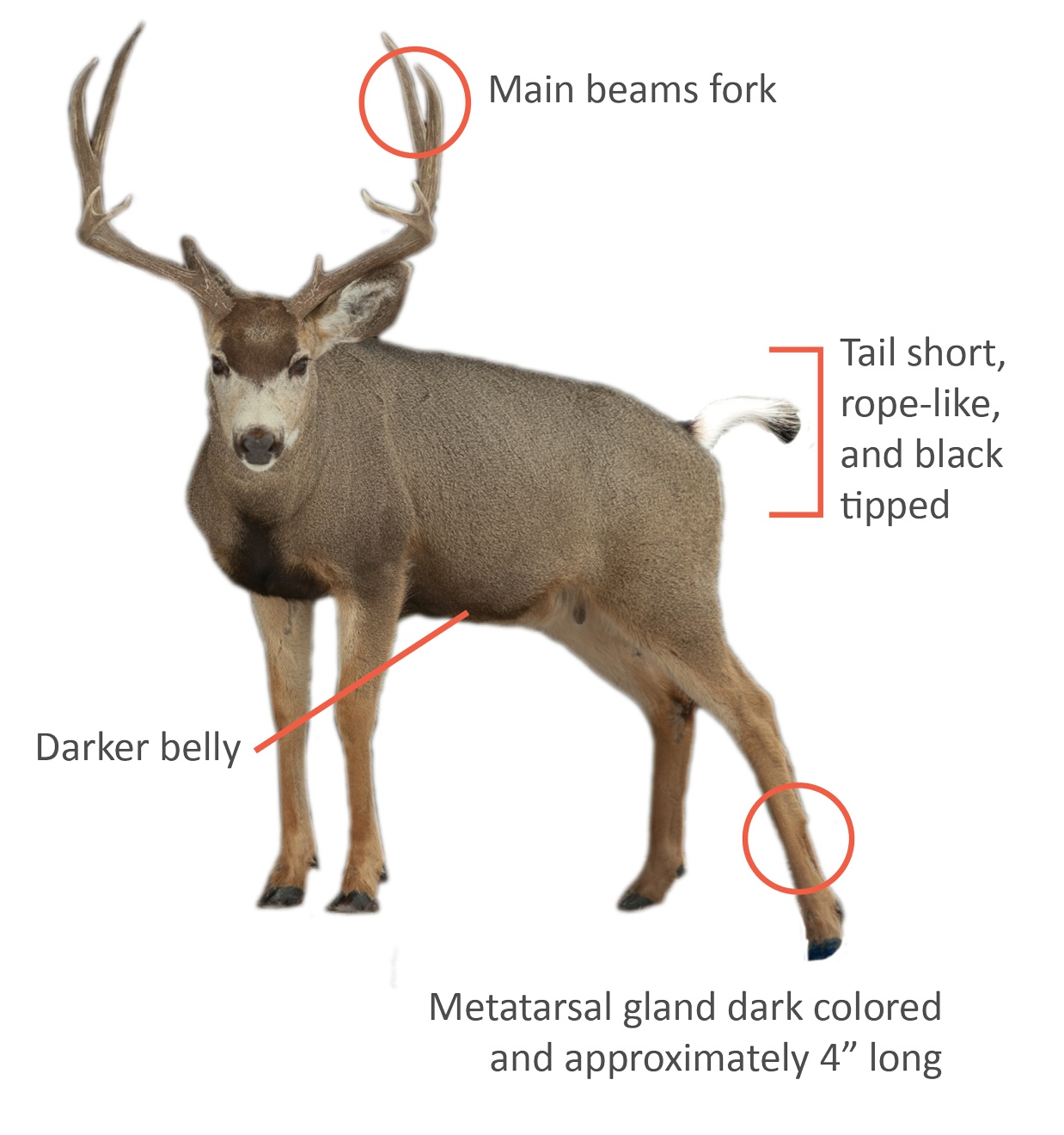
The mule deer is found along the eastern slopes of the Cascades and throughout all of eastern Washington. Its antlers' main beams fork like those of black-tailed deer, except they are usually larger and have more points for the same age class. Most yearling bucks are two-point bucks. Main identification features of the mule deer are its forking antlers; the narrow, white tail with a black tip; darker colored belly; and large mulelike ears.
Black-Tailed Deer
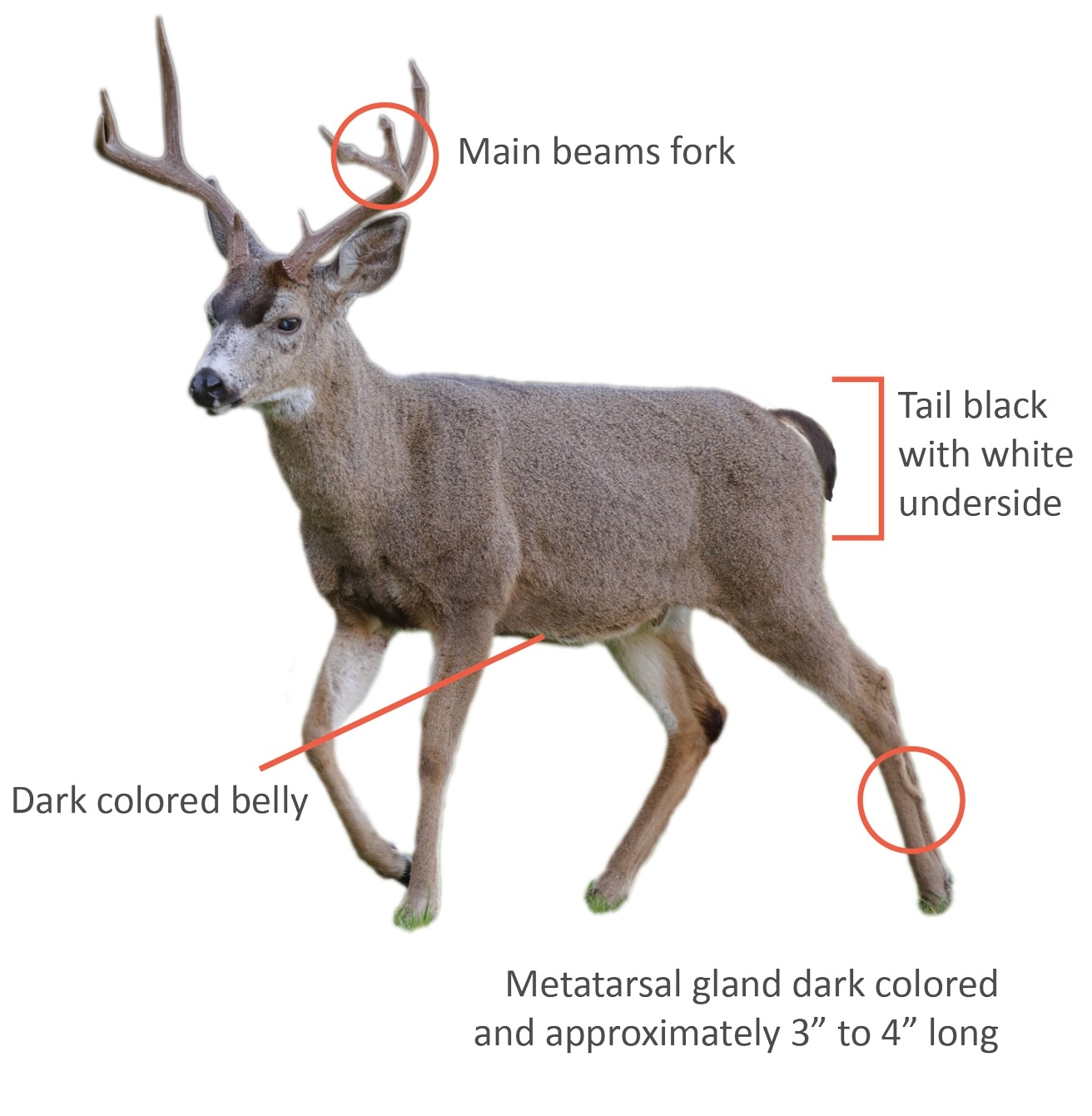
Black-tailed deer are found throughout western Washington. Their antlers also branch like the mule deer, except they are generally smaller. Yearling black-tails usually have only spike antlers. The main identification features are the tail, which is black on top with a white underside, the antlers, and a darker colored belly. While running, the tail will stand up and reveal a white underside. Hunters may mistakenly refer to the deer as a white-tailed deer when they see the underside.
White-Tailed Deer
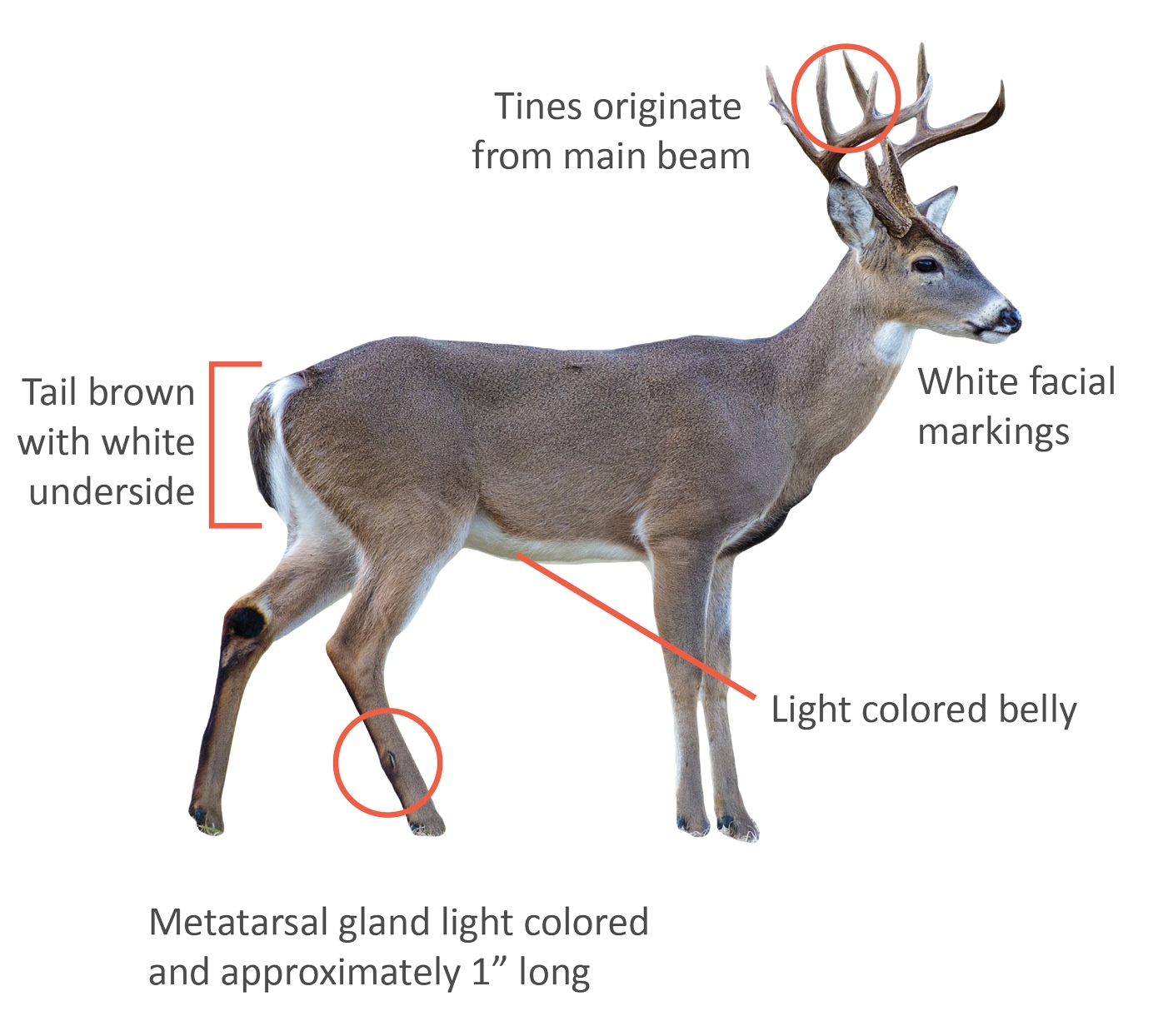
The white-tailed deer are found primarily in the northeastern part of the state. This deer is easily identified by its large tail that is reddish-brown on the topside and white underneath. They have the largest tail of all deer. White-tailed deer antlers do not fork like the mule and black-tailed deer. All tines rise from a single main beam. Other identifying characteristics are their light-colored belly and white facial markings.
Deer Characteristics
Deer antlers, along with size and weight of a deer, provide a good indication of the animal’s health. It is impossible, however, to tell the age of a deer from its antlers. Generally, bucks start to develop their first true antlers when they are ten months old, and nearly all black-tailed deer will grow spikes as yearlings. Most white-tailed and mule deer bucks will grow forked antlers as yearlings, although they are very small. The most accurate method of determining the age of a deer is by examining its teeth.
The main food items of deer are “browse,” primarily the growing tips of woody, brushy plants. Trailing blackberry is a common plant eaten by deer in western Washington. In eastern Washington, deer will feed on bitterbrush, buckbrush, aspen, and alder. In late winter and early spring, most deer include grass in their diet.
Deer are most active in the early morning and evening hours. Often, deer will feed during the night. Most of a deer’s movements relate to finding a suitable feeding area. In western Washington, most deer will remain within a one-square-mile area. In eastern Washington, deer may migrate and cover 40 miles or more during spring and fall.