Treating and Preparing Snares
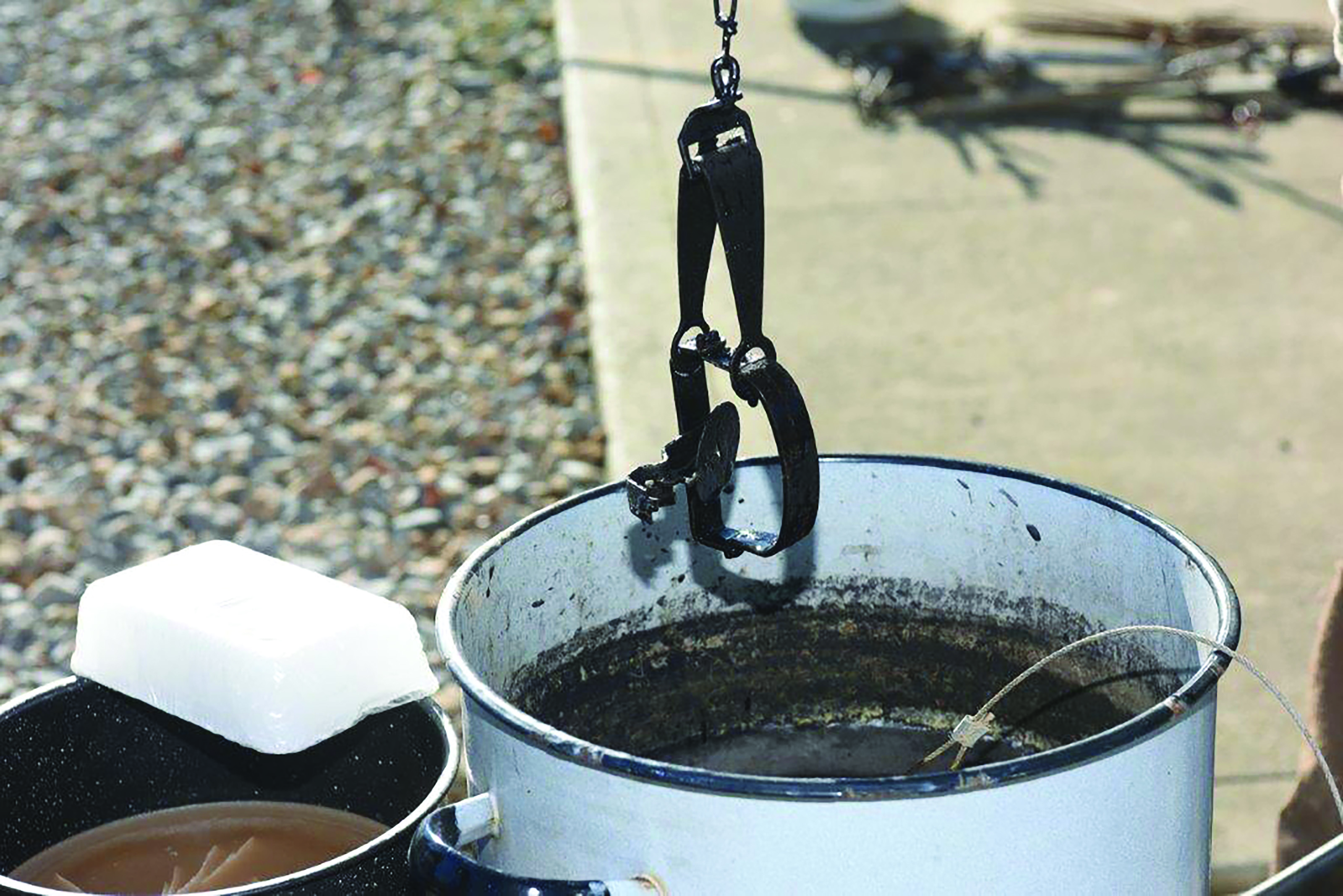
Dyeing and waxing a longspring trap
Snares should be prepared prior to the trapping season or before using them on the trapline.
- Prepare new multi-strand cables to remove the light coating of oil and/or rust preventative on them. New cables and other new parts may also be shiny and reflective. Since snares are blind sets, you do not want them to have any foreign odors or an appearance that may cause the animal to shy away from them. There are multiple ways to prepare your snares. Here are a few suggestions.
- Boil the snares in baking soda and water for 30 minutes to an hour. Use enough water to cover the snares and use four tablespoons of baking soda for every 12 snares. Before removing the snares, skim the top of the water or overflow your container so that any oils are not re-deposited on the snares as they are removed. This will also take the shine off.
- Place the snares outside for 3 to 4 weeks. Allow any rain, snow, and sunlight to reach the snares. This will naturally remove any contaminants from the cable and other parts of the snares.
- Apply a very light coating of spray paint to break up their outlines or to make the snares blend in with the environment. White paint may be used if you typically trap in the snow. Be careful with the paint as any areas affecting the function of the snare lock should have minimal obstructions.
- Use log wood dye, walnut hulls, tree bark, or other natural products to darken or dye the snares. Boil the snares in whatever product you prefer following the same steps given for foothold traps.
- Always inspect your snares before and after each use. If you see any kinks or splits in the cable, you should not use that snare. After catching an animal, the cable will need to be replaced. Most of the other snare parts can be reused with the new cable.
- Plan ahead for each season so that you have enough snares to reset a successful location or to try a new location.