River Otter Sets
River otters can be trapped most effectively with coil-spring foothold traps, longspring foothold traps, and bodygripping traps. Bodygripping traps should be used only in drowning sets.
Channel Set
Coil-spring foothold traps, longspring foothold traps, or bodygripping traps will work in channel sets.
- To locate the trap, look for tracks or grooves on a trail to see where otters are entering the water. Place the trap in the water so that it is in line with the trail.
- With a bodygripping trap, take these additional steps.
- Be sure the chain is short enough and the water is deep enough to keep the otter submerged.
- Put sticks on either side of the trap to help make sure the otter goes through the trap.
- In deeper water, put one or more sticks across the top of the set so that the otter will have to dive under them and into the trap.
Trail Set
Otters travel along trails that go along shorelines, between ponds, across peninsulas, and over dams. Places where a trail narrows or where the water is shallow so the otter must walk instead of swimming are good locations for foothold traps.
- Use an existing groove or dig your own so that the trap blends with surrounding vegetation to catch an otter that is running or sliding by.
- Add sticks on either side so an otter will have to go through the trap.
- Set the pan tension on the trap so it will be triggered by 2 to 4 pounds of pressure. Check the tension and adjust it as necessary after each catch.
- Cover the trap with damp leaves or other suitable covering.
- Follow the recommended procedures for releasing otters safely.
Beaver Den
Otters often use abandoned beaver dens as their den.
- Before setting a trap at a beaver den, make sure the den has been abandoned by the beaver.
- Set a bodygripping trap at the den’s entrance, making sure it is deep enough to keep the otter submerged.
Latrine Site
Otters share a latrine site that may be up to 20 yards from the edge of the water. You can set a foothold trap in this area. Stick branches, limbs, etc. into the ground around the trap to get the otter to step onto the trap pan.
Pocket Set
Foothold traps and bodygripping traps can be used in pocket sets.
- Look for a steep bank near a channel or trail.
- Dig a “pocket” (hole) into the bank so that it looks like the entrance to a beaver den.
- Put bait at the back of the hole. A large piece of fish works well in this situation.
- Set the trap just in front of the hole. If you are using a bodygripping trap, make sure the hole is deep enough so the trap is underwater and will keep the otter submerged.
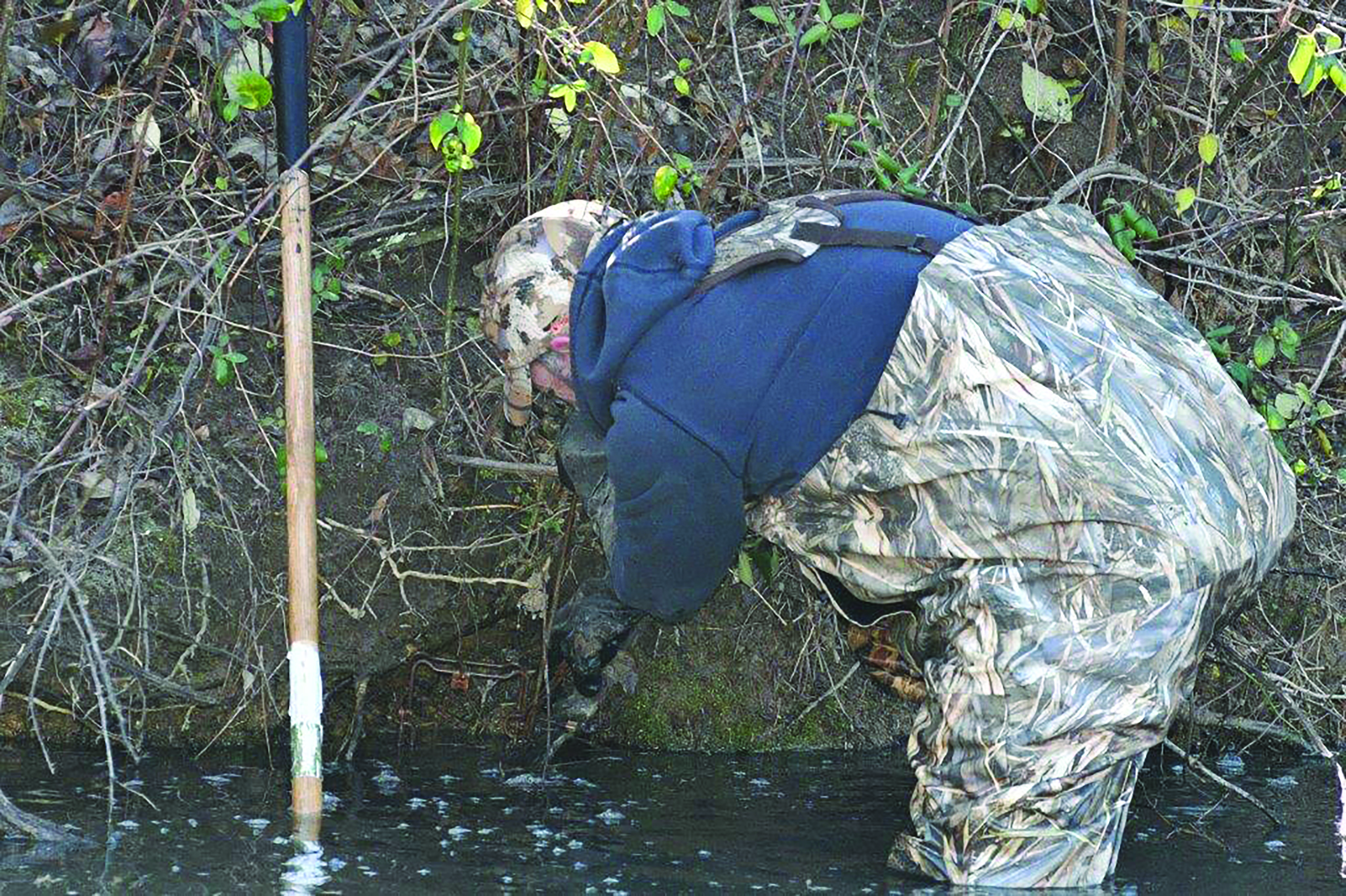
Pocket set with bodygripping trap