Mink Sets
The mink is one of the most difficult furbearers to trap. Sometimes a mink may be caught in a muskrat set. In general, however, successful mink trapping requires sets that are adapted to the mink’s habits. Foothold and bodygripping traps are effective for catching mink.
Pocket Set
The pocket set is one of the standard sets used by successful mink trappers. It is also a good set for raccoons.
Follow these steps to make the set.
- Choose a steep bank. Straight up and down is best.
- Starting slightly below water level, dig a small pocket into the bank. The bottom of the pocket, where the trap will be set, should be 2" below water level. The pocket should slope upward into the bank with the back of the pocket 3" to 4" above water level. The diameter of the pocket should be about 6".
- Place bait—a piece of crayfish, fish, muskrat, mouse, or frog—at the back of the pocket.
- Add mink lure. Wadded grass with lure can be laid at the back of the pocket, or a twig dipped in lure can be stuck into the earth.
- Place a foothold or bodygripping trap of the proper size at the opening to the pocket. Cover the trap lightly with small water-soaked leaves, grass, or watery mud. Stake foothold traps so the mink can reach deep water and suffocate immediately.
If non-target species might come across the set:
- Do not use meat bait, fish bait, or raccoon gland lures.
- Place the trap deeper in the pocket.
- Make the set under a cover that will block dogs (for example, low-hanging branches or exposed tree roots).
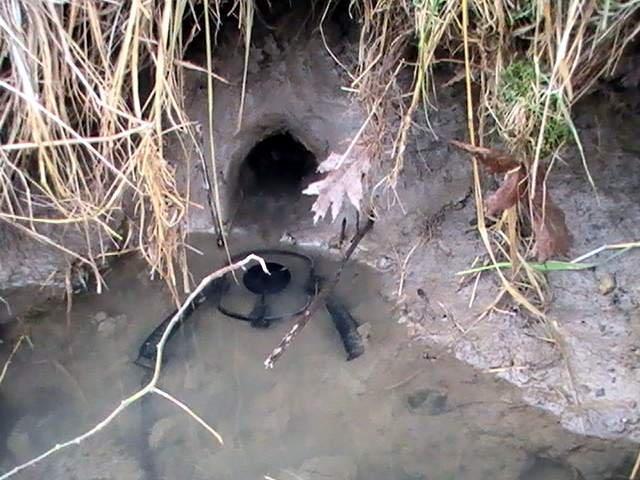
Pocket set with foothold trap
Waterline Den Set
Almost every waterline den opening that is partly out of water will attract passing mink. These dens house crayfish, frogs, and minnows during cold weather.
- Set the trap in the mouth of the den. If the water is too deep, move the trap into the den where it can be placed 2" under the water.
- The best trap for this set is a bodygripping trap. Depending on the type of trap, the square or round frame will cover the hole and must be camouflaged lightly with grass or other plants.