Foothold Traps: Jaws and Sizes
Types of Jaws
- Padded traps have rubber pads on the jaw.
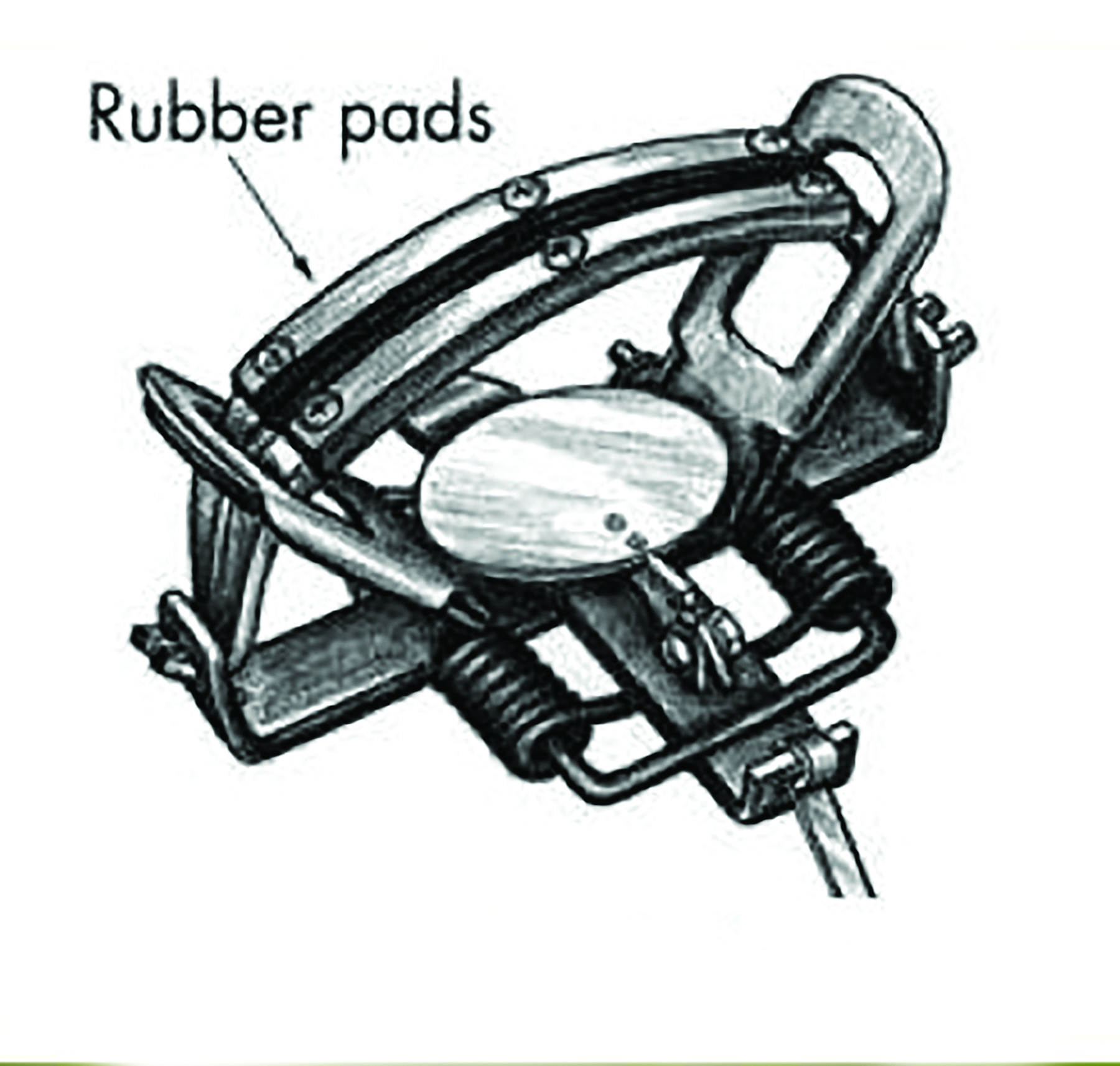
Padded
- Offset jaws leave a space (1/8" to 1/4") between the jaws when closed. This lets the levers close higher on the jaws when an animal is captured, allowing the design of the trap to hold the animal and not the strength of the springs.
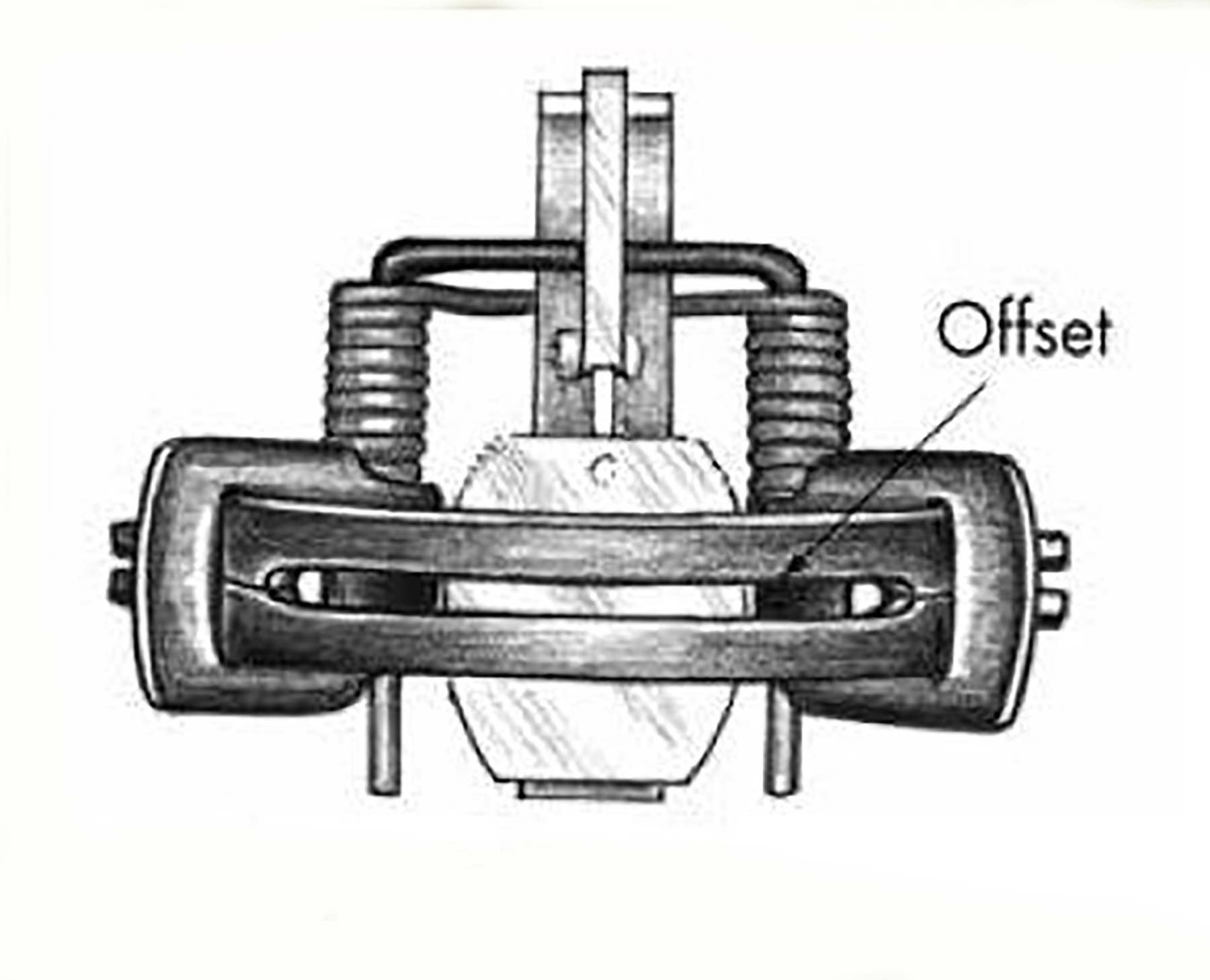
Offset
- Double jaw traps have two sets of jaws. A smaller set of jaws lies inside the regular jaws.
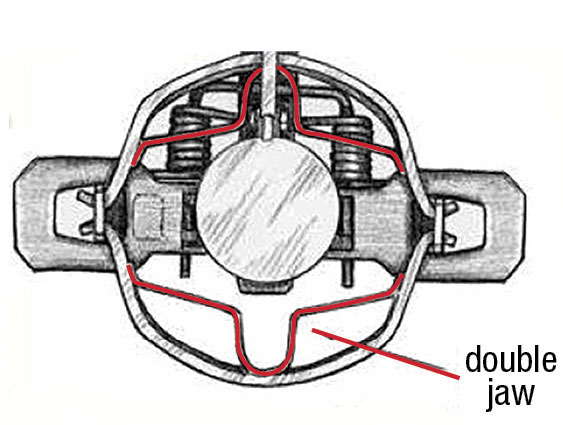
Double
- Laminated jaws include an extra strip of metal above and/or below the jaw. This makes the jaw thicker to increase the surface area holding the furbearer’s foot.
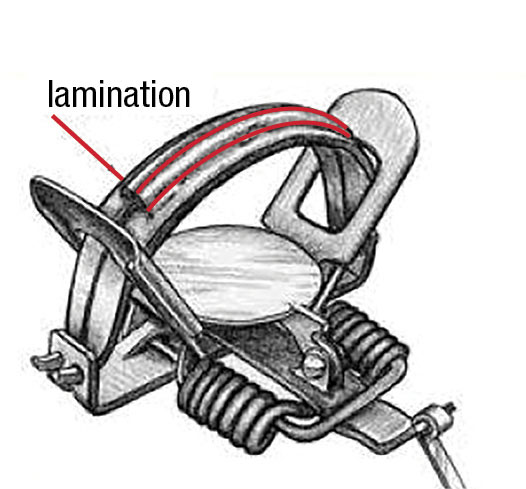
Laminated
Sizes and Selection of Foothold Traps
The size and selection of foothold traps depends on the target species and the location where you will be trapping.
Generally speaking, you would use smaller traps when targeting smaller furbearers and use larger traps when targeting larger furbearers. Examples include:
- #1 or #11 longspring for muskrat
- #4 or #5 for beaver
Some manufacturers use numbers for the different sizes of their traps. However, these sizes are not the same for all manufacturers.
- It is your responsibility to measure your traps to target the furbearers you want to capture and to comply with legal regulations.
- Speaking to an experienced trapper or reviewing best management practices (BMPs) can help you determine the best options.