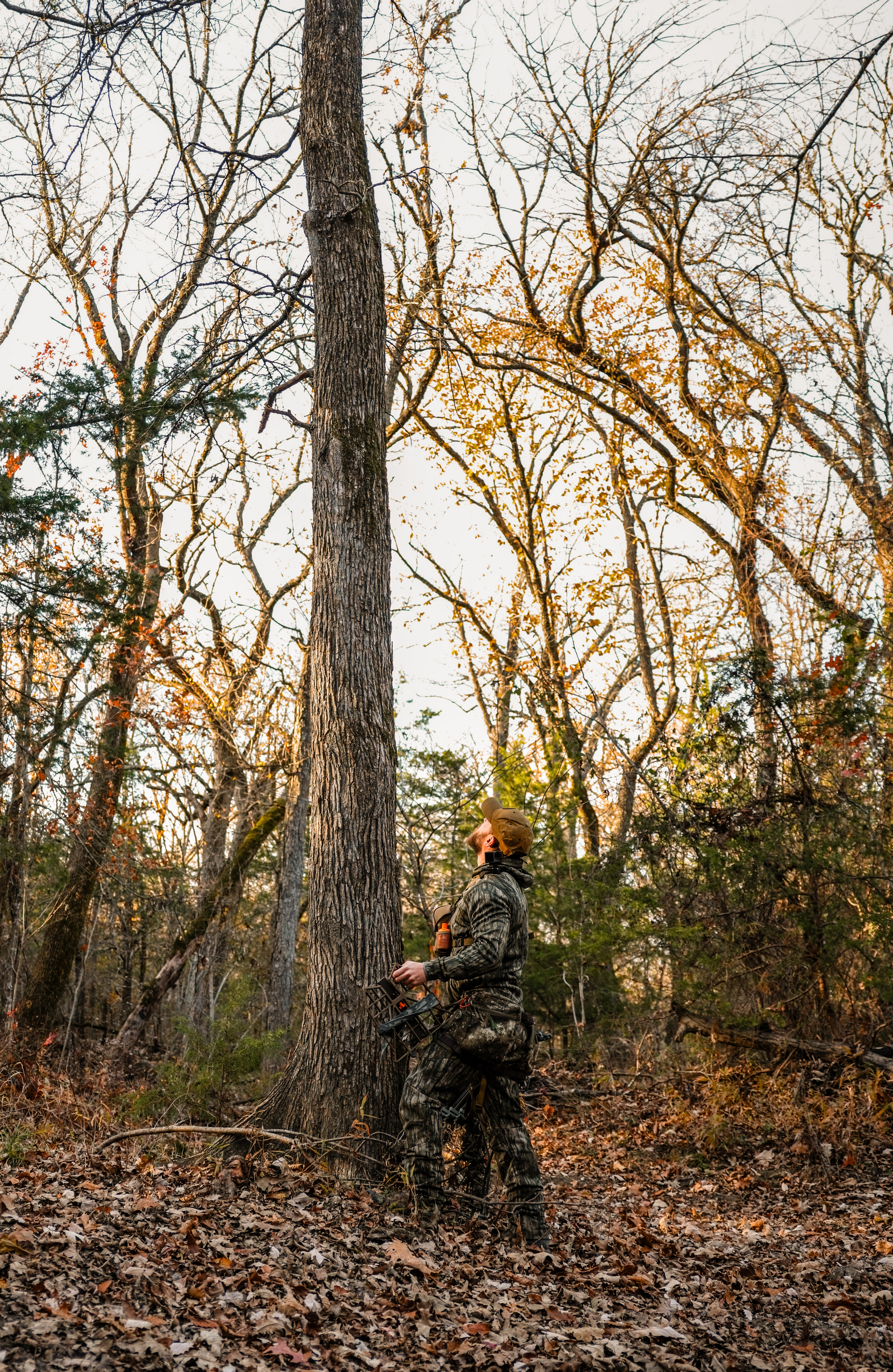
Selecting the Right Tree
Selecting the right tree for saddle hunting depends on several factors, including the hunter’s preferences.
- Location: To hunt game stealthily, you want to pick a tree that is surrounded by cover both by its own branches and the surrounding trees around it.
- Stability: The stability of the tree is extremely important to ensure that the tree will hold your weight and support your ropes without bending, breaking, or shaking during your climb. Choose a tree that is 10 to 24 inches in diameter. If the tree is too large, it can make attaching and adjusting your ropes difficult. NEVER climb a tree that is dead, decaying, wet, icy, or overly leaning.
- Height Range: Proper hunting height will depend on the hunter’s preference for how far they want to be out of a game animal’s visibility range. It is recommended that you choose a tree with enough unobstructed space to get 15 to 20 feet above the ground.
- Number of Obstructions: Some branches on the trunk are okay and can be maneuvered around carefully to reach your hunting height, but too many can be dangerous and significantly slow down the ascent. You want to select a tree that is free of vines and does not have a lot of branches that make climbing difficult. Always ensure that you attach your tether to the tree completely before detaching your lineman belt to move up and over branches.
- Visibility While Hunting: For an optimal hunting experience, you want to choose a tree without too many obstructions that would inhibit visibility to the surrounding area to spot a game animal. This visibility also includes the amount of surrounding trees and branches that may obscure your view of the animal. Where legal, the use of a pole saw or hand saw can be helpful to increase visibility and shooting opportunity.