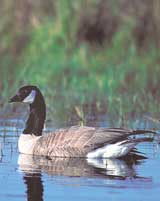
Waterfowl
Waterfowl are warm-blooded animals that live on or near water, and include diving ducks and puddle ducks.
Puddle ducks are found primarily on the shallows of lakes, rivers, and freshwater marshes. Puddle ducks prefer to feed on or near the water’s surface. They launch themselves directly upward when taking off.
Diving ducks inhabit large deep lakes and rivers, coastal bays, and inlets. Diving ducks obtain most of their food by diving. They must run across the water to build up speed to take off.
Range Maps
All animal descriptions are accompanied by a map showing
the animal's habitat range. The maps are color-coded
as follows:
| |
Summer Range |
| |
Winter Range |
| |
All-Year Range |
|
| Duck,
American Wigeon (Puddle Duck) |

Drake |
 |

Hen |
 |

Eclipse Drake |
Male is brown with white crown, green eye patch; green and white on wings visible in flight. Female is mottled brown with gray head. Both have pale blue bill.
Habitat and Habits:
Found on lakes, marshes, and ponds. Makes quacking and whistling sounds. Nests in grasses near water; 9 - 11 cream eggs. |
| Duck,
Black (Puddle Duck) |

Drake |
 |

Hen
|

|

Eclipse Drake |
Sexes are similar. Large brown duck with paler brown head and neck; violet patch on wings.
Habitat and Habits:
Summers on freshwater and saltwater marshes; winters along coast. Female quacks when separated from male; male makes soft, reedy noise. Nests in depressions in ground, close to water; 6 - 12 eggs, cream to greenish-buff colored. |
| Duck,
Blue-Winged Teal (Puddle Duck) |

Drake |
 |

Hen
|

|

Eclipse Drake |
Male is brown and buff speckled; gray head with white crescent in front of eye; pale blue patch on wings. Female is brown speckled; smaller pale blue patch on wings.
Habitat and Habits:
In summer found on small lakes in open grasslands; in winter on marshes and coastal areas. Male peeps; female quacks. Nests in grasses near water; 6 - 15 white eggs. |
| Duck,
Bufflehead (Diving Duck) |

Drake |
 |

Hen |
 |

Eclipse Drake |
Male is mostly white with black back and white patch at back of head. Female is grayish with white patch below eye.
Habitat and Habits:
In summer found on lakes and rivers near woods; in winter on lakes and coastal areas. Male is usually silent; female quacks. Nests in tree cavities; 8 - 10 buff eggs. |
| Duck,
Canvasback (Diving Duck) |

Drake |
 |

Hen
|

|

Eclipse Drake |
Male has white body; reddish head; black breast, bill, and tail. Female has gray body and brown head.
Habitat and Habits:
In summer found on lakes and marshes; in winter on lakes and coastal waters. Male coos during breeding; female quacks. Nests in reeds and grasses; 7 - 12 greenish eggs. |
| Duck,
Cinnamon Teal (Puddle Duck) |

Drake |
 |

Hen |
 |

Eclipse Drake |
Male has reddish body, neck, and head with black coloring on top of head, wings, and back. Female is speckled brown with white around bill.
Habitat and Habits:
Found on lakes and marshes. Male whistles; female quacks. Nests in grasses;
7 - 12 pinkish eggs. |
| Duck,
Eurasian Wigeon (Puddle Duck) |

Drake |
 |

Hen |
 |
Male is gray with rust-colored
head, pinkish chest, buff-colored crown. Female is
mottled brown. Both have large white patches on shoulders
and dull blue bill with black tip. |
Habitat and Habits:
Found on lakes, marshes, and ponds. Makes a 1- or 2-note
whistling call; usually silent in United States.
Nests in grasses hidden in vegetation; 7 - 10
white eggs. |
| Duck,
Gadwall (Puddle Duck) |

Drake |
 |

Hen |

|

Eclipse Drake |
Male is gray with light brown head; white patch on back of wing; black rump. Female is mottled brown with white patch on back of wing.
Habitat and Habits:
Found on open lakes and marshes. Male makes a whistle and “kack-kack.” Nests on islands in colonies; 7 - 13 white eggs. |
| Duck,
Barrow's Goldeneye (Diving Duck) |

Drake |
 |

Hen |
 |

Eclipse Drake |
Male is white with black back and head;
head actually purple in bright light; black and white
wings; white spot in front of eye; black bill. Female
is gray with brown head and white collar; usually a
yellow-orange bill.
Habitat and Habits:
In summer found on wooded lakes and rivers; in winter
on coastal areas. Male grunts and croaks during courtship;
female is mostly silent. Nests in hollow trees or
rock crevices; 5 - 15 pale olive-colored
eggs. |
| Duck,
Common Goldeneye (Diving Duck) |

Drake |
 |

Hen |
 |

Eclipse Drake |
Male has white flanks; black head and back with round white spot below eye. Female is gray with dark head and white collar.
Habitat and Habits:
In summer found on lakes and marshes; in winter on lakes and coastal areas. Male makes a shrill whistle; female a low quack during breeding. Otherwise, usually quiet. Nests in tree cavities; 5 - 15 light green eggs. |
| Duck,
Green-Winged Teal (Puddle Duck) |

Drake |
 |

Hen
|

|

Eclipse Drake |
Male is gray with white vertical bar on shoulder; rust head with green band. Female is speckled dark brown and white with dark band across eye.
Habitat and Habits:
In summer found on ponds and lakes; in winter on rivers and coastal marshes. Male whistles; female quacks. Nests in grasses not always near water; 7 - 15 pale green eggs. |
| Duck,
Mallard (Puddle Duck) |

Drake |
 |

Hen
|

|

Eclipse Drake |
Most common duck. Male often called “greenhead.”
Habitat and Habits:
Found in deep lakes, slow rivers, ponds, and sometimes bays. Main wintering area is the lower Mississippi basin and along the Gulf Coast; many as far north as open waters permit. Female quacks loudly; male makes quiet “yeeb” or low “kwek.” Nests near water; 8 - 10 greenish-white eggs. |
| Duck,
Common Merganser (Diving Duck) |

Drake |
 |

Hen |
 |

Eclipse Drake |
Male has dark green head; dark back; white neck and underside. Female is grayish-brown with reddish-brown head and white breast.
Habitat and Habits:
In summer found on lakes and rivers near woods; in winter on freshwater lakes and ponds. Nests in tree cavities and rock crevices; 8 - 11 cream eggs. |
| Duck,
Hooded Merganser (Diving Duck) |

Drake |
 |

Hen |
 |

Eclipse Drake |
Male has dark crested head with white patches, brownish sides, and white breast. Female is gray with reddish-brown crest and lighter gray breast.
Habitat and Habits:
In summer found on rivers and lakes in wooded areas; in winter on coastal areas. Male makes a croak-like sound; female a “gak.” Nests in tree cavities; 6 - 18 white eggs. |
| Duck,
Red-Breasted Merganser (Diving
Duck) |

Drake |
 |

Hen |
 |

Eclipse Drake |
Male has dark green head, white neck, rusty red breast, and gray sides. Female is gray speckled with light red head and grayish neck.
Habitat and Habits:
In summer found on rivers and lakes; in winter on coastal areas. Nests under shrubs and logs; 5 - 11 greenish eggs. |
| Duck,
Northern Pintail (Puddle Duck) |

Drake |
 |

Hen
|

|

Eclipse Drake |
Long-necked, slender duck with pointed tail. Male has dark brown head; white breast and neck; gray flanks and wings. Female has light brown-speckled body; light brown head and neck; gray bill.
Habitat and Habits:
Summers on marshes and ponds; winters on coastal bays, lakes, and grain fields. Female quacks coarsely; male whistles. Nests near water; 6 - 12 light
green eggs. |
| Duck,
Northern Shoveler (Puddle Duck) |

Drake |
 |

Hen
|

|

Eclipse Drake |
Male has dark green head; white breast; rust-colored wings. Female is brown-flecked with pale blue on shoulders.
Habitat and Habits:
Found on shallow lakes and ponds, and sometimes on brackish marshes. Male croaks; female quacks. Nests in grasses, not always near water; 6 - 14 pale green eggs. |
| Duck,
Redhead (Diving Duck) |

Drake |
 |

Hen
|

|

Eclipse Drake |
Male is gray with reddish head and black breast. Female is brown with darker brown back and crown.
Habitat and Habits:
Found on lakes and bays. Male makes “meow” sound or quacks; female makes a soft low call. Nests in rushes and grasses;
9 - 13 pale eggs. |
| Duck,
Ring-Necked (Diving Duck) |

Drake |
 |

Hen
|

|

Eclipse Drake |
Male is black with pale gray sides. Female is brown with darker back and has white-ringed eyes.
Habitat and Habits:
In summer found on lakes and marshes; in winter on large lakes and coastal areas. Nests in grasses near water;
6 - 14 pale green eggs. |
| Duck,
Ruddy (Diving Duck) |

Drake |
 |

Hen |
 |

Eclipse Drake |
Male is reddish-brown with black head and white cheek; in winter male looks similar to female. Female is brown; darker on head and back.
Habitat and Habits:
In summer found on lakes; in winter on coastal areas. Both sexes are mostly silent. Nests in grasses near water; 6 - 10 white eggs. |
| Duck,
Greater Scaup (Diving Duck) |

Drake |
 |

Hen
|

|

Eclipse Drake |
Male has light gray body and white
sides with dark head, breast, and tail. Female is dark
brown with white spots on either side of bill. Heads
on both are shaped like a rounded rectangle. Light
band on edge of wings extends almost to the tip.
Habitat and Habits:
In summer found on lakes, bays, and ponds; in winter
often found on salt water and coastal ponds. Male
makes a “scaup, scaup” call; female is
mostly silent. Nests in grasses on land or on islands
away from shore; 8 - 12 pale green eggs. |
| Duck,
Lesser Scaup (Diving Duck) |

Drake |
 |

Hen
|

|

Eclipse Drake |
Male has white flanks with dark head, breast, and tail; speckled gray back. Female is dark brown with white spots on either side of bill base.
Habitat and Habits:
In summer found on lakes and marshes; in winter on lakes and coastal areas. Male makes a purring call; females are mostly silent. Nests in grasses near water; 8 - 14 pale green eggs. |
| Duck,
Whistling (Diving Duck) |

Fulvous |
 |

Black-bellied |
 |
 |
Male and female fulvous duck have reddish-brown body with darker back. Male and female black-bellied duck have gray head, light brown back, black underside, and white on sides.
Habitat and Habits:
Fulvous is found in fields, ponds, and marshes; black-bellied on ponds and marshes. All make a whistling call. Fulvous nests in grasses; black-bellied in tree cavities. Both have 12 - 14 whitish eggs. |
| Duck,
Wood (Puddle Duck) |

Drake |
 |

Hen |

|

Eclipse Drake |
Male has colorful crested head and red eyes; iridescent greens, purples, and blues over entire body with white marking. Female is light brown speckled and has white-ringed eyes.
Habitat and Habits:
Found on swamps, ponds, and rivers near wooded areas. Male makes a “hoo-w-ett” call; female a “oo-eek.” Nests in tree cavities; 10 - 15 dull whitish eggs. |
| Goose,
Canada |
 |
 |
Both male and female are brownish-gray; black head and tail; white patch on cheek, breast, and underside. |
Habitat and Habits:
Found on lakes, marshes, fields, and parks. Male and female make honking call. Nests on water edges;
4 - 7 white eggs. |
| Goose,
Snow |

Immature (above); Adult (below) |
 |
Male and female are white with dark gray on underside of wings; short neck; large head. |
Habitat and Habits:
In summer found on tundra; in winter on fields and wetlands. Male and female both honk. Nests in grasses near water in colonies; 3 - 5 white eggs. |
| Goose,
Greater White-Fronted |

Immature (above); Adult (below) |
 |
Male and female are brown with white ring around base of bill; black bars on belly; orange bill and feet. |
Habitat and Habits:
In summer found on tundra; in winter on fields and marshes. Male and female make a high-pitched “kow-kow-kow-kow.” Nests in depressions; 4 - 7 whitish eggs. |
| Swan,
Trumpeter |

Adult (above); Immature (below) |
 |
One of the largest, rarest North American waterfowl. All white with a black bill. (Swans, unlike snow geese, do not have black wingtips. Also, swans are much larger and have longer necks than snow geese.)
|
Habitat and Habits:
Almost driven into extinction, their numbers have been increasing due to conservation efforts. Prefer bodies of water with dense vegetation. Found in marshes, lakes, and rivers mostly in the Northwest.Nests in bulrushes and beaver lodges; 4 - 6 whitish eggs. |
| Swan,
Tundra |

Immature (above); Adult (below)
Credit:Joanna Littlefield |
 |
Most common swan in western part of North America. All white; black bill with yellow spot in front of eye. |
Habitat and Habits:
In summer found on artic tundra; in winter on marshes, lakes, and ponds. Makes a "hoo-ho-hoo" or "kow-wow" call. Nests on mounds of grass on island or shore of tundra lake; 2 - 7 cream-colored eggs. |
| North
American Flyways |
North American Flyways
There are four major North American flyways—the
Pacific, the Central, the Mississippi, and the Atlantic
Flyways. The migration route is from the northern breeding
grounds to the southern wintering grounds. The lanes
of heaviest concentration conform very closely to major
topographical features, following the coasts, mountain
ranges, and principal river valleys. Except along the
coasts, the flyway boundaries are not always sharply
defined. |

Pacific Flyway
Central Flyway
Mississippi Flyway
Atlantic Flyway
|